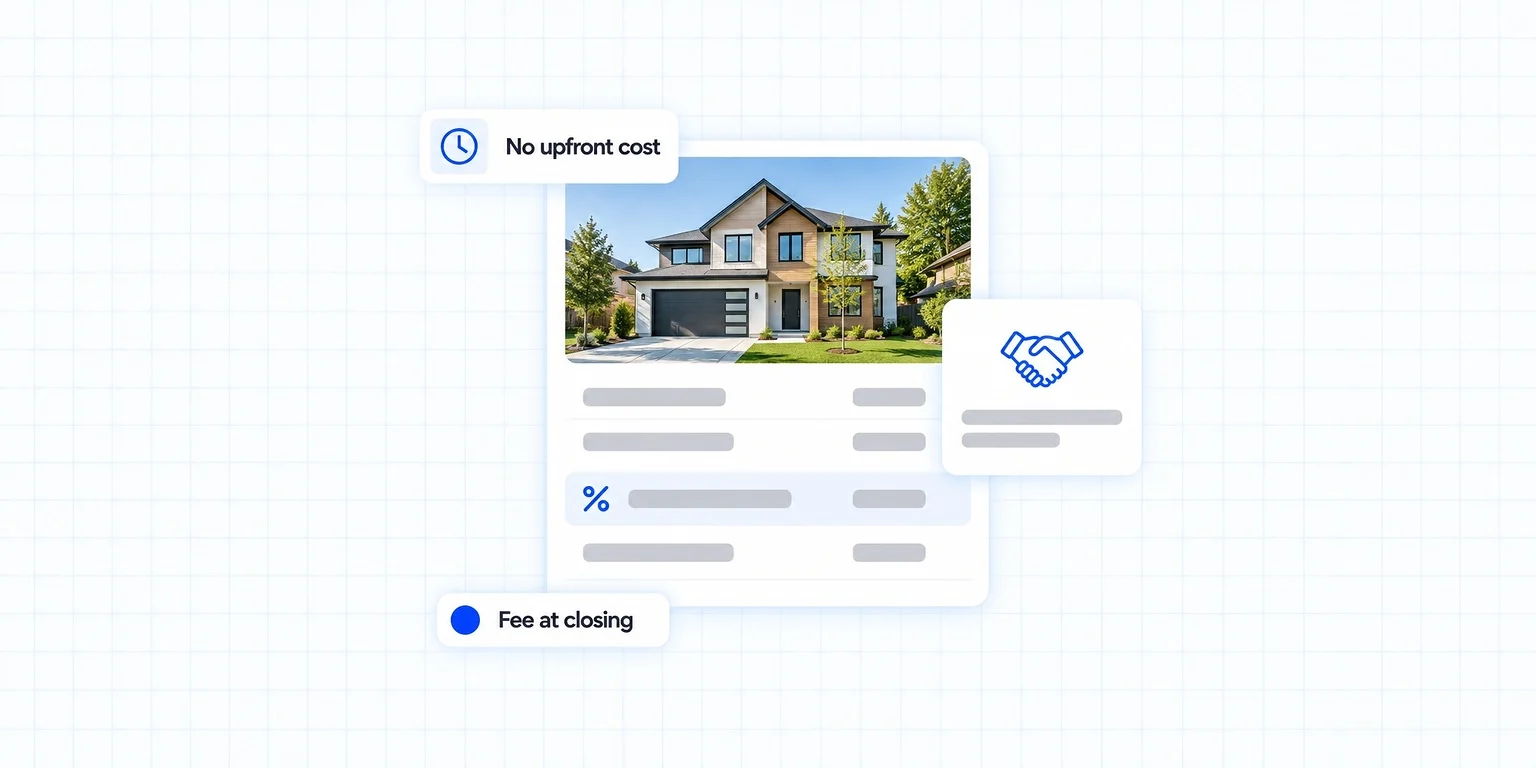
Quick answer: Real estate leads pay at closing are referral programs where you pay nothing up front and give up a share of your commission when the deal closes. Industry comparisons commonly report referral fees of roughly 25% to 40% of the agent’s side, with exact terms set in each program’s agreement and often not published. They are low risk to start and expensive when they work. They make sense for newer agents and agents entering a new market; for established agents, the same money usually builds more in channels they own.
“No upfront cost” is a powerful phrase when you are paying for leads that never answer the phone. Real estate leads pay at closing remove that risk: you only pay when you get paid. That is a genuinely good deal in some situations and an expensive habit in others. This guide explains how pay-at-closing programs work, what they really cost per deal, the questions to ask before you sign, and how to decide whether they fit your business.
What This Guide Covers
- How real estate leads pay at closing work
- What the referral fees typically are
- The real cost per closing
- A one-year comparison
- What a referral agreement covers
- Pros and cons
- Who pay-at-closing leads suit
- How to convert these leads
- Buyer versus seller referrals
- Signs it is time to taper off
- Questions to ask before you sign
- Compared with paying up front, and owning your leads
- Frequently asked questions
- The bottom line
How Real Estate Leads Pay at Closing Work
The model is simple. A company generates buyer or seller leads, usually from its own website, ads or portal. It qualifies them, sometimes with a call, and introduces them to an agent in its network. If that client buys or sells with you, you pay the company a referral fee from your commission at closing. If nothing closes, you pay nothing.
Common types of programs include:
- Portal programs, where a large home search site routes some of its buyer and seller enquiries to partner agents on a referral basis.
- Brokerage partner programs, where a brokerage sends overflow clients it cannot serve to partner agents.
- Referral networks and agent-matching services, which market directly to consumers looking for an agent and pass them on.
Most real estate leads pay at closing programs are selective. Many invite agents based on production, reviews or response times, and many monitor your follow-up and conversion. Some only operate in certain markets.

What the Referral Fees Typically Are
Very few programs publish a fixed rate card, and terms can differ by market, by lead type and by agent. Industry comparisons, such as The Close’s review of pay-at-closing lead sources, commonly report referral fees in the region of 25% to 40% of the agent’s commission on the referred side, with some programs higher for certain lead types.
Two things to know about that range:
- It is a share of your commission, not of the price. On a typical deal, that is thousands of dollars per closing.
- The fee usually comes off before your brokerage split. You pay the referral fee, then split what is left with your broker. Your take-home falls further than the headline percentage suggests.
Because terms vary, the only number that matters is the one in your agreement. Read it, and ask for the fee, the tail period and the rules in writing before you accept your first referral.
The Real Cost per Closing
Here is an illustration with round numbers. Put in your own.
- Sale price: $400,000
- Your side of the commission at 2.5%: $10,000
- Referral fee at 35%: $3,500
- Left before your broker split: $6,500
- After a 70/30 split with your brokerage: $4,550 to you, against $7,000 on the same deal from your own lead
In this example the referral fee costs you $2,450 of take-home on a single deal, once the split is applied. Ten closings a year from real estate leads pay at closing at that rate is $35,000 in referral fees, or $24,500 of your own take-home. That is the real price of “no upfront cost”.

Now compare it with what $24,500 a year could build that you would keep: a website you own, a home value page, a year of a geographic farm, and a CRM, with money left over. None of those take a share of every future deal.
A One-Year Comparison
Here is the same illustration stretched over a year, for an agent who closes six deals from referrals. Again, the numbers are round examples; replace them with your own.
- Six referred closings at a $10,000 commission side and a 35% fee: $21,000 in referral fees.
- After a 70/30 broker split, the referral fees cost about $14,700 of take-home compared with the same six deals from your own leads.
- For comparison, an owned website from $685 one-time, an IDX license and hosting of about $75 a month, and a modest monthly farm budget come to a fraction of that in year one, and the website is still yours in year two.
That does not make real estate leads pay at closing a bad choice. Six closings you would not otherwise have had are six closings. The point is to know the price, and to use some of that income to build sources that will not charge you for the seventh.
What a Referral Agreement Usually Covers
Before you take a single referral, read the agreement, because it decides your real cost. Most agreements cover the same few areas, and each one is worth a question.
- The fee for each lead type, and when it is calculated.
- The tail period: how long after the introduction the fee applies, and whether it covers a second transaction with the same client.
- Payment: usually paid through your brokerage at closing, which is why your broker must sign off.
- Service standards: response times, updates and how leads can be reassigned.
- Termination: how either side can end the agreement, and what happens to clients in progress.
If any of these are unclear, ask before you start. It is far easier to negotiate or walk away before the first closing than after it.
Pros and Cons of Real Estate Leads Pay at Closing
Pros
- No upfront risk. You only pay when you earn.
- Often pre-qualified. Many programs screen leads by phone before passing them on, so you talk to people who have confirmed they want an agent.
- Volume when you need it. Useful when you are new, entering a new area, or have gaps in your pipeline.
- Experience. Working more deals early can help you learn the business faster.
Cons
- High cost per closing. A large share of every referred deal, for as long as you use the program.
- Tail periods. Many agreements cover the client for a period after the introduction, sometimes including future transactions within that window.
- Performance rules. Programs may require fast response times, regular updates and minimum conversion, and can remove agents who fall behind.
- You build their brand, not yours. The client’s first relationship is with the program. When the program changes terms or leaves your market, the flow stops.
- Competition. Some leads are shared with or reassigned to other agents if you do not respond fast enough.
Who Real Estate Leads Pay at Closing Suit
A good fit:
- Newer agents with time and no pipeline, who need deals and experience more than margin.
- Agents entering a new market, where they have no sphere yet.
- Teams with spare capacity and a disciplined follow-up system, where an extra deal is pure upside.
A poor fit:
- Established agents with a strong sphere and referral business, for whom every program deal is margin given away.
- Agents who cannot respond within minutes, because the programs and the clients both reward speed.
- Agents who want to build a lasting brand, since each referred client knows the program first.
The healthiest approach is usually to treat real estate leads pay at closing as a bridge: use them while you build channels you own, and taper them off as those channels grow.
How to Convert Real Estate Leads Pay at Closing
If you take these leads, the fee only makes sense if you close them. The agents who do well with real estate leads pay at closing tend to share a few habits.
- Answer instantly. Many programs measure response time in minutes, and clients often speak to whoever answers first. Set up notifications to your phone and treat a new referral like a ringing phone.
- Prepare before you call. Read whatever the program sent: price range, area, timing, notes from the screening call. Open with something specific to them.
- Book a meeting, not just a chat. The goal of the first call is a showing, a buyer consultation or a listing appointment.
- Update the program promptly. Most require status updates. Keeping them current protects your standing and the flow of future referrals.
- Stay in touch for months. Many referred clients are not ready yet. A simple follow-up plan in your CRM turns “maybe next spring” into a closing.
Buyer Referrals Versus Seller Referrals
Not all real estate leads pay at closing are equal. Buyer and seller referrals behave differently.
Buyer referrals are more common and often earlier in the process. Expect more showings, more time, and more clients who drift or buy with someone else. The fee applies only when they close with you.
Seller referrals are rarer and usually more valuable: a listing creates marketing, sign calls and often a buyer client too. Some programs price seller referrals differently. If you are offered seller referrals, prepare a strong listing presentation and a pricing analysis before the first appointment.
Signs It Is Time to Taper Off
Real estate leads pay at closing work best as a stage, not a permanent strategy. These are the signs you have outgrown them:
- Your referral fees for the year are more than an owned website, a farm and a CRM would cost together.
- Your sphere and past clients now send you steady business, so referred deals compete for your time with deals that cost you nothing.
- You are turning down or rushing your own clients to meet program response times.
- Your Google Business Profile and website are bringing in enquiries on their own.
Tapering does not have to be sudden. Take fewer referrals, prioritize the ones in your core area, and put the time you free up into the channels that keep paying without a fee.
Questions to Ask Before You Sign
- What is the referral fee, exactly, for buyer and seller leads, and is it calculated before or after my broker split?
- What is the tail period? How long after the introduction does the fee apply, and does it cover future deals with the same client?
- What are the performance requirements? Response times, update frequency, conversion targets.
- Can leads be reassigned to another agent, and when?
- Does my brokerage approve? Referral agreements usually run through your broker, who must agree to the fee.
- How do I leave? What happens to clients you are already working with if you exit the program?
Get the answers in writing. They decide whether the program is a bargain or an expensive habit.
Compared With Paying Up Front, and Owning Your Leads
There are three ways to get leads, and each puts the cost in a different place.
- Pay at closing: no cost up front, a large share of every closed deal. Low risk, high cost per success.
- Pay up front: a monthly fee or cost per lead, whether or not anything closes. Higher risk, lower cost per success if you convert well. I broke down one example in Real Geeks pricing.
- Owned channels: your website, home value page, Google Business Profile, farm and sphere. An investment of money and time up front, then no share of future deals. Slower to start, cheapest over time, and the asset stays yours.
Most successful agents end up with a mix: owned channels as the base, with paid or pay-at-closing leads to top up when needed. I covered the owned channels for sellers in real estate seller leads, and the most effective single tool in home value landing page.

Frequently Asked Questions About Real Estate Leads Pay at Closing
What are real estate leads pay at closing?
Referral programs where you pay no upfront fee and instead give the program a share of your commission when a referred client closes. If nothing closes, you pay nothing.
How much is the referral fee?
It varies by program and is often not published. Industry comparisons commonly report fees around 25% to 40% of the agent’s commission on the referred side. Your agreement sets the exact figure.
Are pay-at-closing leads worth it?
They can be for newer agents, agents entering a new market and teams with spare capacity. For established agents, the referral fees often add up to more than it would cost to build channels they own.
Is the referral fee taken before or after my broker split?
Usually before. The referral fee comes off the commission first, and your brokerage split applies to what remains. Check your agreement and your brokerage’s policy.
Do pay-at-closing programs require anything from me?
Most do: fast response times, regular status updates and sometimes minimum conversion. Agents who fall behind may receive fewer leads or be removed.
Can I use several pay-at-closing programs at once?
Often, yes, as long as each agreement allows it and your brokerage approves. Track each program’s fee, response requirements and results separately, so you know which one actually earns its share.
Are real estate leads pay at closing better than buying leads up front?
They are lower risk, because you pay only when you close. They are usually more expensive per closing. If you convert well and can afford the upfront cost, paid leads can cost less per deal; if you are new or cash is tight, paying at closing protects you.
How do I get into a pay-at-closing program?
Many are invitation-based or require an application showing your production, reviews and responsiveness. Availability also depends on your market.
The Bottom Line on Real Estate Leads Pay at Closing
Real estate leads pay at closing are neither a trap nor a shortcut. They are a trade: no risk today in exchange for a meaningful share of tomorrow’s commission. Used deliberately, for a defined period and with fast follow-up, they can fill a pipeline and fund the channels that will eventually replace them. Used by default, year after year, real estate leads pay at closing quietly become one of the largest costs in an agent’s business. Decide which of those you want before you sign, and review it every year.
What I Would Do
If you are new or entering a new area, use real estate leads pay at closing as a bridge, follow up every one within minutes, and put part of every referred commission into channels you own: a website, a home value page, a farm. Track your referral fees for a year. When they add up to more than those owned channels would cost, start tapering off.
If you want the owned side built properly, I build lead generation websites for agents with seller tools, IDX search and leads routed to your phone or CRM, so the next client is yours from the first click. 200+ sites, a 5.0 rating from 180+ verified reviews. Book a free consultation.
Want this done for your website?
Book a free, no-pressure call and I’ll map exactly how your real estate website can capture more leads, and what it costs to own it.

Asraful has built 200+ real estate websites with IDX and MLS integration, rated 5.0 across 180+ verified reviews. He writes about owning your website, lead generation and getting found on Google.
More about Reaplex