Quick answer: A Lofty website is the IDX website that comes with Lofty, the real estate CRM platform formerly known as Chime. Every Lofty plan (Agent, Team, Broker and Enterprise) lists a fully customizable IDX website alongside the CRM, with extras such as a hyperlocal SEO website, website design services and SEO setup sold as add-ons. Lofty does not publish prices; every plan is “request pricing”. A Lofty website makes the most sense if you are choosing Lofty as your CRM anyway. If you only need a website, you are buying a platform to get one.
Agents usually search “Lofty website” for one of two reasons: they are on Lofty and want to know what their site can do, or they have been pitched Lofty and want to know what they would be getting. This guide answers both. It is based on what Lofty publishes on its own pricing and plans page, checked at the time of writing. I build websites agents own, so I will be clear about where a Lofty website is the right call and where it is not.
What This Guide Covers
- What a Lofty website is
- What each Lofty plan includes
- Website add-ons and extra costs
- What a Lofty website costs
- Where a Lofty website is strong
- Where it is limited
- Getting the most from a Lofty website
- Questions to ask before you sign
- Moving to your own site while keeping Lofty
- Who a Lofty website suits
- Lofty website vs a website you own
- Alternatives, including keeping Lofty with your own site
- Frequently asked questions
What a Lofty Website Is
Lofty is primarily a CRM: lead management, follow-up automation, texting, email and AI tools for agents, teams and brokerages. The website is one part of that platform. On every plan, Lofty’s pricing page lists an IDX website as “fully customizable”, alongside unlimited agent subdomains for teams and an external listing widget for showing listings elsewhere.
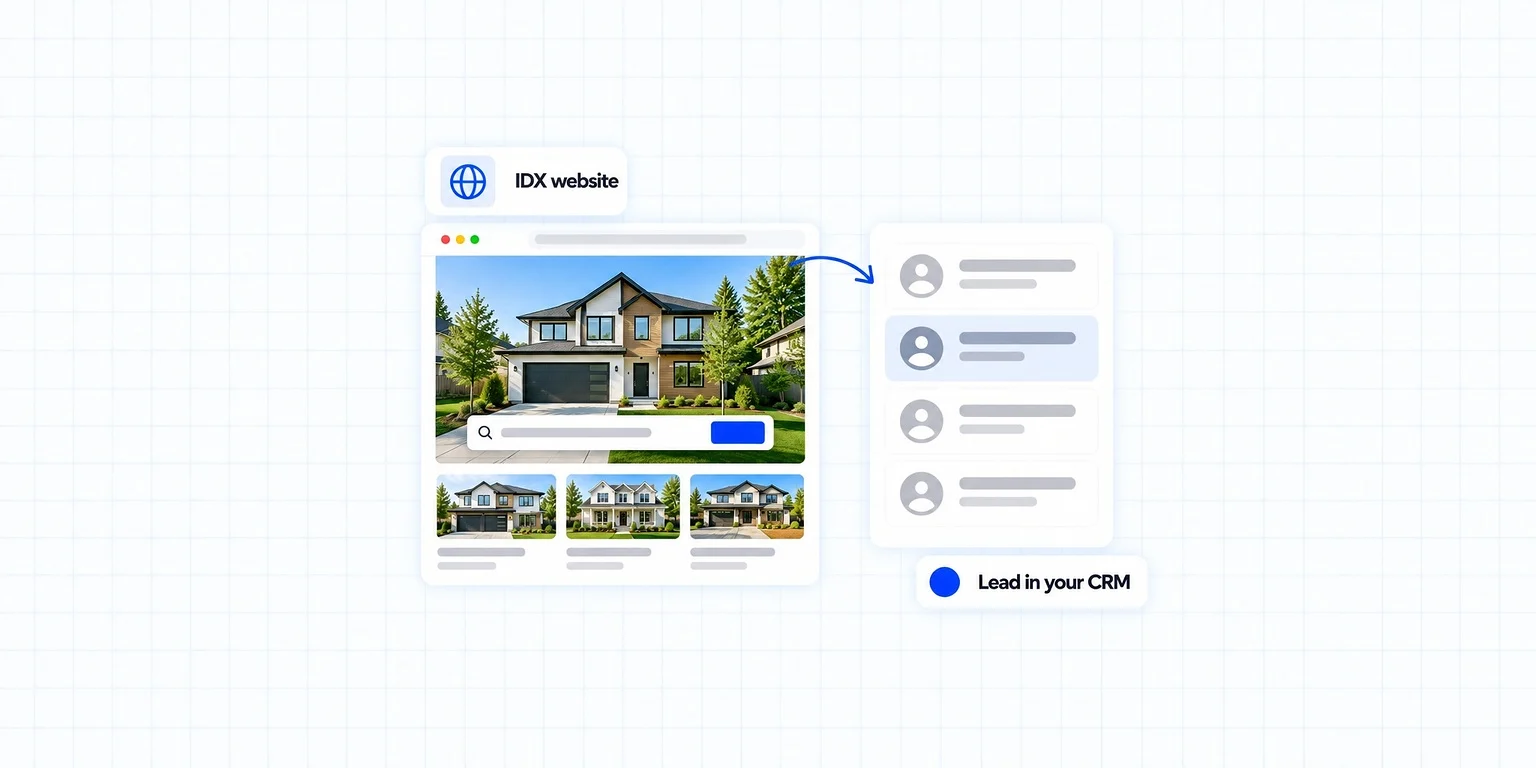
The appeal is integration. A visitor who searches homes or registers on a Lofty website lands directly in the Lofty CRM, with their search behavior attached, and enters your follow-up automation without any connection to set up. For agents who live in Lofty every day, that is the main reason to use the built-in site.

In August 2026, Lofty also announced a website product called Lofty Front, described in RISMedia’s coverage as built for search and AI search visibility, and available on its own or connected to the Lofty platform. Ask your Lofty representative which website product your quote includes.
What Each Lofty Plan Includes
Lofty publishes four platform plans, each with “request pricing”:
- Lofty Agent, for individual agents.
- Lofty Team, adding team features such as lead routing and management.
- Lofty Broker, for brokerages, with broader management and reporting.
- Lofty Enterprise, for large organizations, with options such as single sign-on and white labeling.
The website-related features listed across the plans include the fully customizable IDX website, unlimited agent subdomains, an external listing widget and listing tools. The CRM side includes an AI-powered CRM with unlimited contacts, email and text automation, a basic dialer, calendar and email integrations, and a mobile app. Higher tiers add advanced lead routing, team management, reporting and dedicated customer success support.
The practical point: the Lofty website is the same core product across plans. You choose a plan mostly for the CRM and team features, not for a better website.
Lofty Website Add-Ons and Extra Costs
The pricing page lists a set of add-ons, each also “request pricing”. The ones that affect your Lofty website are:
- Hyperlocal SEO Website
- Website Design Services
- SEO Setup Services
- WordPress IDX Plugin, which suggests Lofty listings can also be used on a WordPress site
Other add-ons include a lead generation service, a power dialer, additional text packages, a CMA builder and several AI agents.
The pricing page also states some marketing terms at the time of writing: seller lead generation carries a 20% ad management fee, and without an IDX site, seller lead generation requires a $70 a month home evaluation page. Sphere branding ads carry a 15% ad management fee and require a higher CRM plan. If you plan to buy ads through Lofty, include those fees in your comparison.
What a Lofty Website Costs
Lofty does not publish plan prices. Its pricing page says pricing “varies based on your choice of platform package, seat count, optional upgrades and lead-gen programs”, and every plan leads to a quote. That is common for all-in-one platforms, but it means you must build your own comparison.
Use the same three-year formula you would use for any platform:
Three-year cost = any setup fee + (monthly fee x 36) + website add-ons + ad management fees on any ads you run.
Then separate what you are paying for the CRM from what you are paying for the website. If you would pay for a CRM anyway, the Lofty website may be close to free in effect. If you would not, compare the full figure against a website you own plus the CRM you would actually use. I set out an owned-site budget in real estate website cost.

Where a Lofty Website Is Strong
- Leads land in the CRM instantly, with their search and listing activity attached, so you know what a buyer is looking at before you call.
- Automation is built in. New registrations can enter follow-up plans and listing alerts without extra setup.
- Team-ready. Agent subdomains and lead routing suit teams that share one platform.
- One vendor, one login for website, CRM, texting and marketing tools.
Where a Lofty Website Is Limited
- You are renting the website. As with any platform, the site depends on the subscription. Ask in writing what happens to the website, your content and your domain if you leave.
- The CRM is the core of the product. Lofty is built around the CRM. If brand and design are your priority, check live client sites carefully, and price the design add-on.
- Pricing is not public. You cannot compare easily without a quote, and the total depends on add-ons.
- One system for everything. The more of your business runs inside one platform, the more planning it takes to change one part of it later.
Getting the Most From a Lofty Website
If you are already on Lofty, these are the changes that usually make the biggest difference to a Lofty website, whatever plan you are on.
- Use your own domain. Make sure the site runs on a domain registered in your name, not a platform subdomain. It protects your brand and any search value the site builds.
- Write your own area pages. Automated content helps fill a site, but pages written in your voice, with your local knowledge and recent sales, are what set you apart from every other agent on the same platform.
- Add a clear seller path. A sell page and a home value request, linked from the main menu. Most agent sites lean toward buyers; sellers are the more valuable lead. I covered the format in home value landing page.
- Set up follow-up before traffic. Make sure new registrations trigger a sensible first message and a call reminder, so every lead the site brings gets a fast response.
- Check speed on a phone. Open your Lofty website on your own phone over mobile data. If the home page is slow, ask support what can be trimmed.
- Connect your Google Business Profile. Link it to your site’s home page or main area page, and keep your name, phone and service area consistent across both.
Questions to Ask Lofty Before You Sign
Because pricing is quoted privately, these questions are how you turn a demo into a number you can compare.
- What is my total for the first year, including setup, seats and every add-on in the quote?
- Is the price fixed for the term, and what is the term?
- Which website product is included: the standard IDX website, Lofty Front, or the hyperlocal SEO website add-on?
- Does website design cost extra, and what does the design service include?
- Whose name is on the domain, and can I bring my own?
- If I cancel, what can I export: contacts, notes, blog posts, pages?
- What ad management fees apply if I run ads through Lofty?
Write the answers down next to the same questions for any other option you are considering. The comparison usually becomes obvious.
Moving to Your Own Website While Keeping Lofty
Some agents like Lofty’s CRM but want a website with more design control and full ownership. That move is straightforward if you plan it:
- Confirm your domain is registered in your name, or transfer it to your own registrar account.
- List your current pages and their URLs, especially any that bring in search traffic.
- Build the new site with IDX on your domain, licensed directly from a provider your MLS approves.
- Connect the forms to Lofty, so registrations and enquiries still land in your CRM and trigger the same follow-up.
- Redirect old URLs to their new equivalents, so you keep any rankings the old site earned. Google’s guidance on site moves explains why each redirect matters.
- Switch the domain to the new site, test every form, and keep Lofty running as before.
Done this way, nothing changes in your daily work except that the website is now yours. I covered the redirect side in more detail in website migration.
Who a Lofty Website Suits
A good fit:
- Agents and teams who have chosen Lofty as their CRM and want the website to feed it without integration work.
- Teams that need agent subdomains and lead routing on one platform.
- Agents who buy leads or plan to, and want everything in one system.
A weaker fit:
- Agents who mainly need a strong brand website and already use a different CRM.
- Agents who want to own their website and be able to move it.
- Agents whose business is mostly sphere and referrals, who would pay for CRM and lead tools they rarely use.
Lofty Website vs a Website You Own
Here is how the two approaches compare on the things that matter most to an agent’s website.
- Lead flow into Lofty: built in on a Lofty website; on your own site, set up once through form integration or the IDX plugin, then automatic.
- Design and brand: a Lofty website uses Lofty’s system, with design services as an add-on; an owned site is designed around your brand with no platform limits.
- IDX: included on a Lofty website; on your own site, licensed directly from a provider your MLS approves, typically $60 to $150 a month for a solo agent.
- Ownership: a Lofty website runs on Lofty’s platform; an owned site, its content and its search value stay with you whatever CRM you use.
- Cost structure: a Lofty website is part of a quoted subscription; an owned site is a one-time build plus IDX and hosting.
- Changing software later: leaving Lofty means rebuilding a Lofty website; with an owned site you change the CRM connection and keep everything else.
Neither is wrong. The Lofty website wins on convenience for agents who run their whole business in Lofty. An owned site wins on brand, flexibility and long-term cost for agents who expect to keep their website for years.
Alternatives, Including Keeping Lofty With Your Own Site
You do not have to choose between Lofty and your own website. Three common setups:
- Lofty CRM with the Lofty website. Simplest. Everything in one place, all rented.
- Lofty CRM with a website you own. Your own WordPress site, with IDX on your domain, sending leads into Lofty. The pricing page lists a WordPress IDX plugin as an add-on, and most CRMs accept leads from your own site forms. You keep the brand and the site; Lofty keeps doing what it does best.
- Another platform entirely. If you are comparing all-in-one options, Real Geeks and Sierra Interactive publish their starting prices. I broke down one in Real Geeks pricing, and compared several in real estate website builders compared.
Option two is the one I build most often for agents who like their CRM but want a better website. Leads go straight into the CRM through CRM integration, and the website stays theirs whatever they decide about software later.

Frequently Asked Questions About the Lofty Website
Does Lofty include a website?
Yes. Lofty’s pricing page lists a fully customizable IDX website on every plan: Agent, Team, Broker and Enterprise.
How much does a Lofty website cost?
Lofty does not publish prices. Every plan is “request pricing”, and the total depends on the plan, seat count, add-ons and any lead generation programs.
Is Lofty the same as Chime?
Lofty is the platform formerly known as Chime. Agents who used Chime will recognize the CRM and website features.
Can I use Lofty with my own website?
Yes. Many agents use Lofty as their CRM and send leads to it from a website they own. Lofty’s add-ons include a WordPress IDX plugin, and most website forms can send leads into a CRM.
What happens to my Lofty website if I cancel?
Ask Lofty in writing before you sign. As with any platform, the website runs on their system, so plan for how you would move your content, contacts and domain.
Can a team use one Lofty website?
Yes. The plans list unlimited agent subdomains and, on team tiers, lead routing, so a team can run a main Lofty website with pages or subdomains for each agent and route enquiries to the right person.
Do I need a Lofty website if I already have a site?
No. Many agents keep their existing website and connect it to Lofty so leads still land in the CRM. Compare that against moving to the built-in Lofty website before you decide.
How long does it take to launch a Lofty website?
Setup time depends on your plan, your MLS approval for IDX and whether you buy the design service. Ask for a written launch timeline, and keep your current site live until the new one is tested and your domain is ready to switch.
Is a Lofty website good for SEO?
It includes IDX listings and blog features, and Lofty sells SEO setup and a hyperlocal SEO website as add-ons. As with any IDX site, check that listing pages are readable by Google and that you can create real local content.
What I Would Do
If you are choosing Lofty for its CRM, try the built-in Lofty website first and judge it on your own brand and your own local content. If the website is the part you care most about, keep Lofty for what it does well and put your leads into it from a site you own.
That second setup is what I build: IDX websites on WordPress that you own outright, connected to the CRM you use. 200+ sites, a 5.0 rating from 180+ verified reviews, and most go live in 2 to 4 weeks. Book a free consultation.
Want this done for your website?
Book a free, no-pressure call and I’ll map exactly how your real estate website can capture more leads, and what it costs to own it.

Asraful has built 200+ real estate websites with IDX and MLS integration, rated 5.0 across 180+ verified reviews. He writes about owning your website, lead generation and getting found on Google.
More about Reaplex