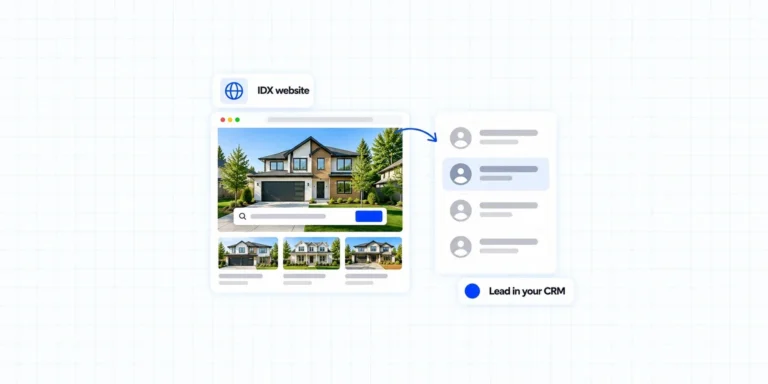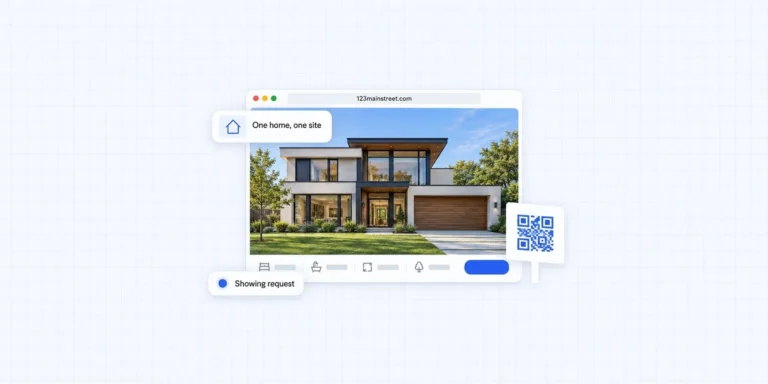
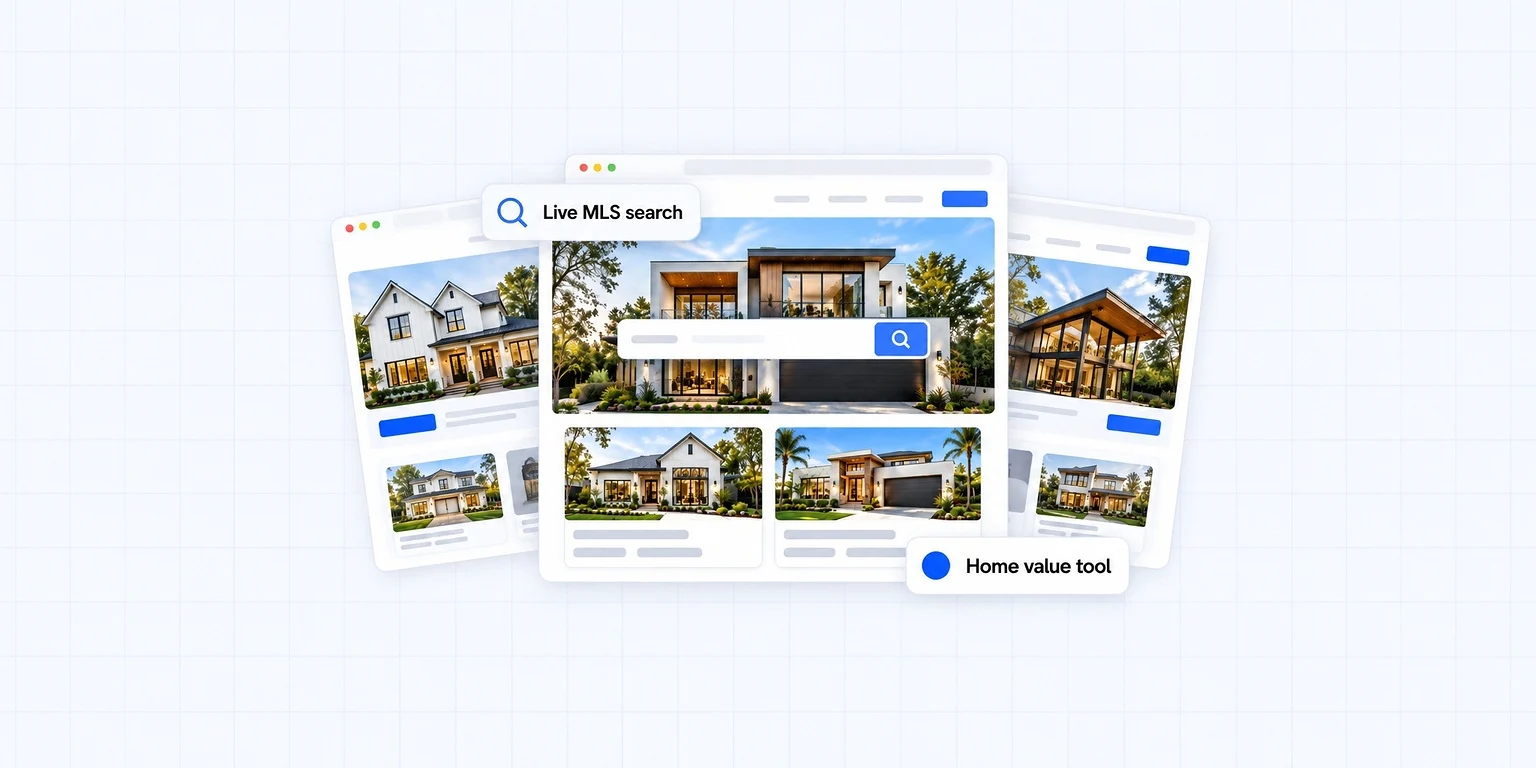
Quick answer: The best real estate agent website examples are not the prettiest ones. They are the ones that give a buyer a reason to search on the agent’s own site, give a seller a reason to call, and give Google local pages worth ranking. Below are nine real, live websites for agents, teams and brokerages across the US, what each one does well, and the lesson you can take for your own site.
A note on where these real estate agent website examples come from. I built every site on this list, so I can tell you why each decision was made and what it was meant to do, which is something a gallery of screenshots cannot. These are real estate agent website examples from real businesses with real domains, not concept designs. Every one is owned outright by the agent or firm, on WordPress, with no monthly platform fee. If you want inspiration from big-name platforms you will find plenty elsewhere; if you want real estate agent website examples you can actually learn from, start here.
What This Guide Covers
- What makes a good real estate agent website example
- Real estate agent website examples: solo agents
- Examples for teams and brokerages
- Examples for investors and developers
- What the best examples have in common
- Real estate agent website examples by goal
- What weak examples get wrong
- How to use examples to brief your own site
- Frequently asked questions
What Makes a Good Real Estate Agent Website Example
Most lists of real estate agent website examples judge on looks. Looks matter for about three seconds. After that a visitor is asking three questions, and the site either answers them or loses them.
- Can I search homes here? A buyer who can search on your site has every reason to stay and contact you. A live MLS search on your own domain keeps them.
- Why this agent? Local knowledge, results, reviews, a real face. Generic “your dream home awaits” copy answers nothing.
- What do I do next? Book a call, get a home value, save a search. One clear next step, repeated down the page.
Google is asking its own version of the same questions. It wants pages about specific places and specific services that it can match to local searches. That is why neighborhood and county pages show up again and again in the examples below.

Real Estate Agent Website Examples: Solo Agents
1. Jesse Carlson Real Estate, Twin Cities, MN
jessecarlson.com is the calmest site on this list, and that is the point. Jesse’s service is thorough and unhurried, so the site is too: a warm hero, separate “Buy With Jesse” and “Sell With Jesse” journeys, a four-step guided process, and six neighborhood market pages for Minneapolis, Saint Paul, Edina, Eagan, Plymouth and Apple Valley.
What it gets right: the conversion tools are built in rather than bolted on. A Homebot home valuation for sellers, IDX search for buyers, and Calendly booking for video consultations. In Jesse’s words, I was “quick at connecting important tools like Homebot and Ylopo” to his account.
The lesson: match the site’s tone to how you actually work, then put a tool behind every call to action. “Contact me” is weak. “See what your home is worth” is a reason.
2. Michael Olubajo, REALTOR®, Philadelphia, PA
therealestatemike.com is built around search. Showcase IDX powers property search, listing pages, visitor accounts and saved favorites, all on Michael’s own domain, with dedicated location pages for Philadelphia and the Montgomery, Delaware and Chester county markets he serves.
What it gets right: credentials and proof are everywhere a doubt might appear. His designations, a live Google reviews feed, a mortgage calculator and buyer and seller guides. Michael is a repeat client, which tells you the site kept doing its job.
The lesson: if you serve several counties, give each one a page. Buyers search by place, and so does Google.
3. Steve Facelle Real Estate, Greater Boston, MA
stevefacellerealestate.com leads with strategy rather than listings. Buyer and seller services, a home valuation request, neighborhood pages for Boston, Cambridge and Somerville, and a market insights blog, with a “schedule a consultation” call to action at every step.
What it gets right: it is built for a market where sellers interview several agents. The site does the first interview for him.
The lesson: in an expensive market, your site’s job is to win the listing appointment, so lead with your process and your thinking, not just your inventory.
4. CABAHAUS (Luis Caballero), Florida
cabahaus.com is the data-driven example. MLS-powered property search with live listings, separate buyer, seller and investment pages, and featured homes that update in real time.
What it gets right: separate paths for separate people. An investor and a first-time buyer want different things from the same agent, and each gets a page that speaks to them. Luis described the result as “clean, modern, and user-friendly”, which is exactly what a search-heavy site has to be.
The lesson: if you serve investors as well as homebuyers, split the journeys. One generic page serves neither well.
Real Estate Agent Website Examples for Teams and Brokerages
5. SoFlo Homes Group, South Florida
soflohomesgroup.com wins on values. The team calls itself “your friendly South Florida neighborhood realtors”, and the site tells founder Jawaad’s story, introduces the staging, media, PR, marketing and transaction specialists behind each sale, and anchors the brand in a giving-back mission tied to every home closed.
What it gets right: in a crowded market, it gives people a reason to remember the team that is not about price. And it shows sellers the full machine behind their sale, which is what a seller is really buying from a team.
The lesson: a team site should sell the team, not one agent with a few headshots underneath. Show the roles. Sellers want to know who does what.
6. A-List Vacation Homes, Las Vegas, NV
alistvh.com serves three audiences on one brand: buyers, sellers, and owners who want their property managed as a high-earning vacation rental. Each gets its own journey, with For Sale and For Rent listings a click away, Las Vegas location guides, a home valuation and a mortgage calculator.
What it gets right: three businesses, one uncluttered site. That is harder than it sounds. A-List is an ongoing Reaplex client, so the site has kept evolving with the business.
The lesson: if you run more than one line of business, give each its own clear path from the home page, and keep the navigation honest about what you do.
7. Empyrean Real Estate & Mortgage, Sacramento, CA
empyreanrealestateandmortgage.com is the search-heavy brokerage example: map search, basic and advanced search, AI smart search, address and listing ID lookup, plus an interactive city map, home valuation, market reports and financing pages with a mortgage calculator.
What it gets right: financing and search under one roof, so a buyer goes from browsing to pre-approval without leaving. Another ongoing Reaplex client.
The lesson: every way a buyer might want to search should exist on your site, because every search on your site is a search not happening on a portal.
Examples for Investors and Developers
8. CORE Realty Group, Connecticut and New York
corerealtygroup.com is a boutique investment sales brokerage for multifamily, mixed-use and commercial property. A dark, gold-accented brand, featured listings, a closed-deal track record, and a “request a valuation” path in the hero, the closing section and the service pages.
The lesson: when your client is a property owner rather than a homebuyer, the whole site should funnel to one action, and here it is the valuation request.
9. Chase Smiles Development, Nashville, TN
csdevelopments.net runs two businesses side by side: new-home construction on one path, fast cash offers for homes and land on the other, with a three-step “how it works” and a Tennessee homeowner blog.
The lesson: a two-sided business needs two front doors. Do not make a homeowner who wants a cash offer wade through floor plans.
What the Best Real Estate Agent Website Examples Have in Common
Lay the nine real estate agent website examples side by side and the same six things keep showing up. Use this as your checklist.
- Search on their own domain. IDX listings that live on the agent’s site, not in a frame borrowed from the provider. If you want the background, what IDX is and why it matters covers it.
- Separate buyer and seller paths. Different people, different questions, different pages.
- A seller tool. A home valuation, a market report, a request-a-valuation form. Sellers are the most valuable lead an agent gets, and a tool gives them a reason to identify themselves.
- Local pages. Neighborhoods, cities or counties, each with real content. This is the foundation of local SEO for real estate agents.
- Proof. Reviews, results, credentials, a real person.
- Ownership. Every site here belongs to the agent or firm. They can change a headline themselves, and nothing switches off if they stop paying a platform.

None of those six is about color, fonts or animation. Design makes them believable. It does not replace them.
Real Estate Agent Website Examples by Goal
If you are short on time, start from what you want the site to do and go straight to the real estate agent website examples that do it best.
- You want more seller leads: look at Jesse Carlson (a Homebot valuation behind every seller call to action) and CORE Realty Group (one valuation request, repeated in the hero, the services and the close).
- You want buyers to stop searching on portals: look at Empyrean (every search type, plus a city map) and Michael Olubajo (accounts and saved favorites, so buyers come back).
- You want to rank in specific neighborhoods: look at Jesse Carlson’s six neighborhood pages and Steve Facelle’s Boston, Cambridge and Somerville pages.
- You run a team: look at SoFlo Homes Group, which sells the team and its specialists rather than one face.
- You run more than one line of business: look at A-List Vacation Homes (sales, rentals and management) and Chase Smiles (construction and cash offers).
- You work with investors: look at CABAHAUS for a separate investment path, and CORE Realty Group for a firm built around owners.

Two real estate agent website examples that match your goal are worth more than twenty that merely look good. Open each one on your phone, not just your laptop, because that is where most of your visitors will see your site. Notice how quickly you can search, how quickly you can find the agent’s phone number, and whether the next step is obvious without scrolling. Those three things are what visitors judge, even if they would never put it that way.
A practical exercise: open your own site next to two of these real estate agent website examples and answer the three questions from the top of this guide for each. Where yours comes third, you have your to-do list.
What Weak Real Estate Agent Websites Get Wrong
For balance, here is the other side of the real estate agent website examples above: what I see on the sites agents ask me to replace. If your current site does several of these, each one is a good place to start improving.
- A search that sends people away. A “Search homes” button that opens the provider’s site, or a frame Google cannot read. You lose the visitor and the ranking.
- A home page about the agent and nobody else. Four paragraphs of biography and no reason for a buyer or seller to act.
- Stock everything. Stock photos, stock copy, a template that three other agents in your market also use. I wrote about the signs in 7 signs your real estate website is outdated.
- Slow on a phone. Most visitors arrive on mobile. A site that takes five seconds to show anything has lost many of them before the hero loads.
- Leads that sit in an inbox. A form that emails an address nobody watches. Speed to lead decides who gets the client.
How to Use Real Estate Agent Website Examples to Brief Your Own Site
Collecting real estate agent website examples is useful only if you collect the right thing. Do not screenshot a site because you like its color. Write down what it does that you want yours to do.
- Pick three examples, for three reasons. One for search, one for how it talks to sellers, one for tone. You are not copying a site; you are assembling a brief.
- Name your two most valuable visitors. First-time buyers and move-up sellers? Investors and landlords? Every page should be built for one of them.
- List your local pages. The neighborhoods, towns or counties where you want to be the obvious agent. These become your SEO plan.
- Choose your seller tool. Home valuation, market report, or a direct valuation request.
- Decide where leads land. Your phone, your CRM, or both, within minutes. If you use Follow Up Boss, Lofty or similar, the site should push straight into it through CRM integration.
Bring that to any designer, me included, and you will get a far better site than “something like this one, but blue”.
Frequently Asked Questions About Real Estate Agent Website Examples
What is the best website for real estate agents?
The best website for a real estate agent is one they own, with live MLS search on their own domain, separate buyer and seller paths, a seller tool such as a home valuation, local area pages, and leads routed to their phone or CRM within minutes. The platform matters less than those five things.
Should a real estate agent website have IDX?
If you work with buyers, yes. With it, buyers can search on your own site and contact you directly. The important detail is that the listings should live on your domain in a form Google can read, not in a frame. The guide to IDX websites for REALTORS® covers what to check.
How many pages should a real estate agent website have?
Fewer than you think, but the right ones: home, buy, sell, a home valuation page, about, contact, and one page for each neighborhood or area you want to rank in. Jesse Carlson’s site has 17 pages including six neighborhood pages, which is a sensible size for a solo agent.
Can I copy real estate agent website examples I like?
Copy the structure and the ideas, never the words, photos or design files. Text and images are protected, and duplicate content also does nothing for your rankings. Use examples to decide what your site should do, then write it in your own voice.
How much does a site like these cost?
It depends on scope. Reaplex plans start from $685 one-time for a site you own, with a Custom plan quoted on a call, and most sites are live in 2 to 4 weeks. The IDX provider is a separate monthly license. I broke the numbers down in real estate website cost.
See More, or Start Yours
All nine of these real estate agent website examples, plus the rest of the portfolio, are on our work, with the full brief, the build and what happened after launch for each one. If you have a site and want to know how it measures up against the six things above, take the free website audit.
If you are ready for your own, I build websites for real estate agents that you own outright, with IDX search on your domain and leads routed where you will see them. 200+ sites so far and a 5.0 rating from 180+ verified reviews. Book a free consultation and bring your three examples.
Want this done for your website?
Book a free, no-pressure call and I’ll map exactly how your real estate website can capture more leads, and what it costs to own it.

Asraful has built 200+ real estate websites with IDX and MLS integration, rated 5.0 across 180+ verified reviews. He writes about owning your website, lead generation and getting found on Google.
More about Reaplex